The first half
Tenor arias for newcomers
The opera arias named for the Sorrento concert, for newcomers: the stories behind Vesti la giubba, E lucevan le stelle and Nessun dorma.
Reserve your seats ↗Arias in brief
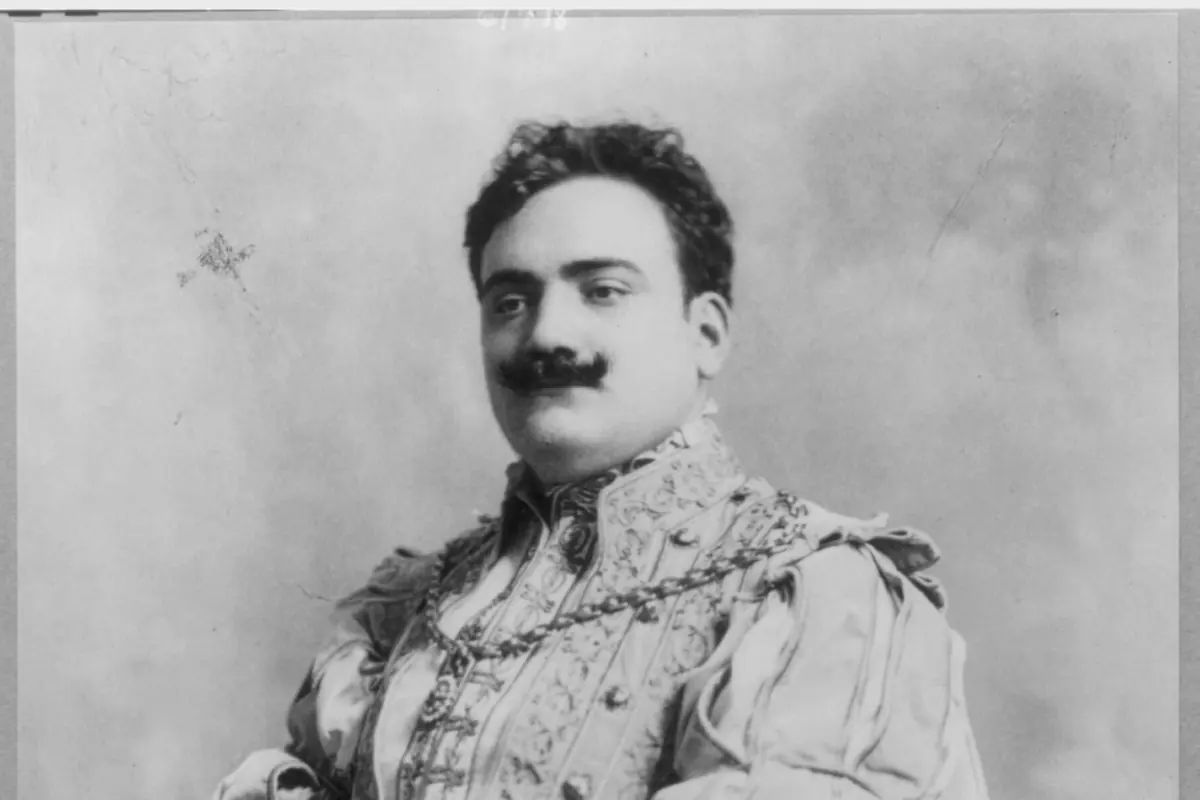
An aria is a solo number taken from an opera or similar stage work. A concert strings several together so that you hear the high points of different operas in one sitting, without the plots that connect them. The tenor, the highest of the usual male voices, has many of the most famous ones, which is why a tenor trio can fill a programme with arias alone. Each piece below is sung in Italian, and each stands on its own. Opera also uses recitative, the speech-like passages that carry the plot between arias; a concert leaves those out and keeps the melodies.
Vesti la giubba
It comes from Pagliacci, an opera by Ruggero Leoncavallo, premiered in 1892. The singer plays Canio, a travelling player who has just learned of his wife's infidelity but must still put on the clown's costume and perform. The aria is the picture of the tragic clown, smiling outside and crying inside. The title means put on the costume, and an English version is often called On with the Motley. Enrico Caruso's recordings of it from 1902, 1904 and 1907 were among the best-selling records of the 78 rpm era.
E lucevan le stelle
It belongs to Giacomo Puccini's Tosca, first heard at Rome's Teatro Costanzi on 14 January 1900, a day later than planned because of fears of unrest. In the last act the painter Cavaradossi is in prison with an hour to live. He asks to write a letter to Tosca, and then memories overwhelm him, so that the letter turns into the aria: and the stars shone. It is one of the two famous arias of the opera, alongside Tosca's own Vissi d'arte.
La donna è mobile
It is the Duke of Mantua's song in Verdi's Rigoletto, first staged at Venice's La Fenice on 11 March 1851, with Raffaele Mirate as the Duke. The title means woman is fickle. Verdi withheld it from the singers and orchestra until hours before opening night and banned any whistling of it; by the next morning, reportedly, it was being sung in the streets. It runs only two or three minutes, which makes it a favourite showpiece for tenors.
Nessun dorma
It comes from the last act of Puccini's Turandot, which was left unfinished at his death in 1924, completed by Franco Alfano and premiered on 25 April 1926. Prince Calaf sings it, saying let no one sleep. He has answered the princess's three riddles, and she may have him executed if she guesses his name before dawn, so he expects to win by morning. Luciano Pavarotti took it far beyond the opera house after singing it for the 1990 World Cup, and it later featured on the best-selling classical recording ever made.
The orchestral breather
Programmes for this kind of concert sometimes include an instrumental piece, and the Intermezzo from Pietro Mascagni's Cavalleria rusticana is one that has been named for the Sorrento concert. The opera premiered on 17 May 1890 at the Teatro Costanzi in Rome. Since 1893 it has often been staged with Pagliacci as a double bill, a pairing nicknamed Cav and Pag, so the first half of the concert quietly echoes a famous evening at the opera.
Granada and the other named pieces
Granada, by the Mexican composer Agustín Lara, dates from 1932 and is about the Spanish city; it is José Carreras's signature tune, and was the only song that all three of the original Three Tenors sang as solos in different concerts. Nel blu dipinto di blu and Con te partirò are later songs, associated with Domenico Modugno and Andrea Bocelli. The programme may include them next to the arias above, and both are famous: Nel blu dipinto di blu, known as Volare, won Sanremo in 1958 and came third at Eurovision, and Con te partirò was first sung by Bocelli at Sanremo in 1995.
Sources