The second half
The songs of Naples, explained
The songs of Naples in the second half of the concert for newcomers: where canzone napoletana comes from and what its best-known songs are.
Reserve your seats ↗What canzone napoletana is
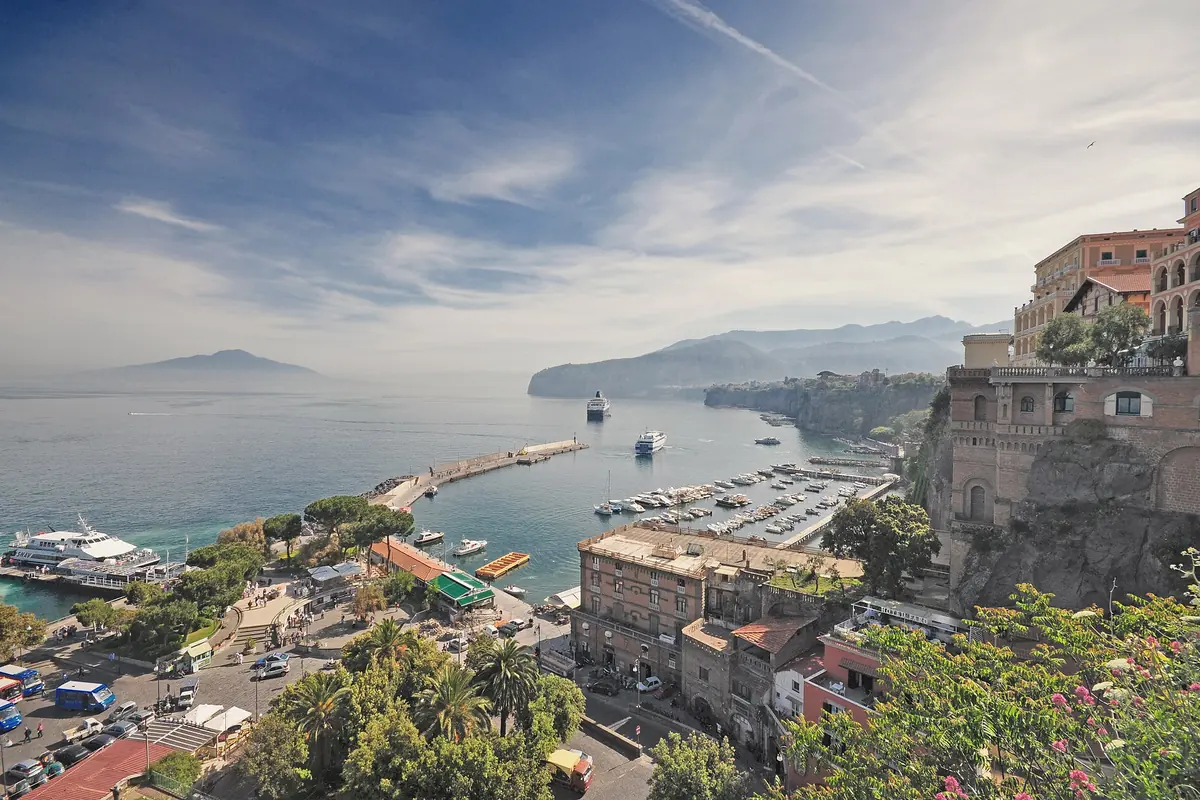
Canzone napoletana is the name for song in the Neapolitan language, usually written for one voice, most often a man's, although women sing it as well. Love songs and serenades dominate, and plenty of them miss the Naples of an earlier age. It is composed popular music and not anonymous folk song. Santa Lucia, Funiculì funiculà, Torna a Surriento and 'O sole mio are the titles most people know. The words are in Neapolitan, so they differ from standard Italian even where the sense is easy to guess.
A song contest that built the genre
From the 1830s the genre had a yearly stage: a song-writing contest attached to the Piedigrotta festival, named for a church in the Mergellina district of Naples. The contest ran regularly until 1950. Emigrants from Naples and the south carried the songs overseas between roughly 1880 and 1920, and touring tenors, Enrico Caruso among them, kept them alive by singing his home city's music as encores.
'O sole mio
Dated 1898, with verses by Giovanni Capurro and a tune credited to Eduardo di Capua. The name means my sun. The tune went to di Capua alone for about 75 years, until Alfredo Mazzucchi's daughter claimed a share for her father and a Turin judge agreed in 2002. At the 1920 Olympic Games in Antwerp it stood in for the Italian anthem, whose music had not turned up. Elvis Presley's It's Now or Never took its melody.
Torna a Surriento
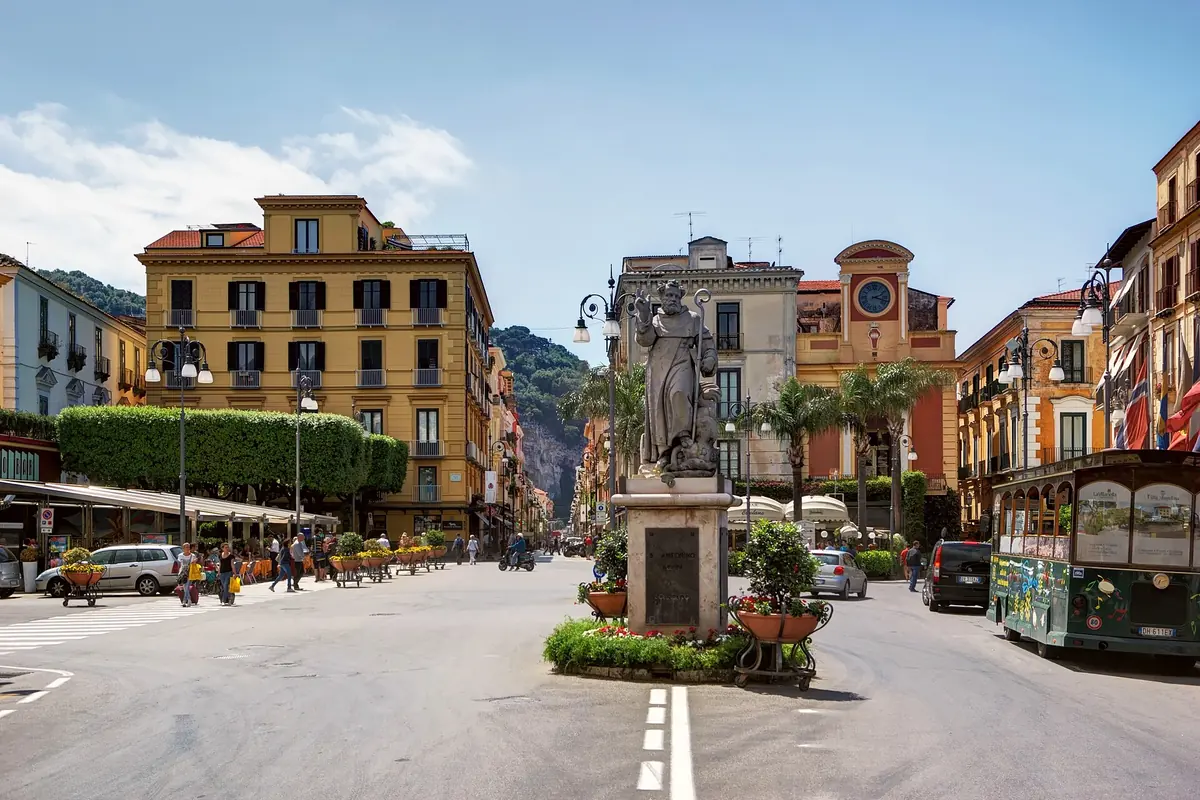
The brothers Ernesto and Giambattista De Curtis, a musician and a poet and painter, made this song, whose title means Come back to Sorrento. Tradition places its writing in 1902, when the mayor of Sorrento asked Giambattista for a song for Prime Minister Giuseppe Zanardelli, who was staying at the Imperial Hotel Tramontano. More recent research suggests the brothers had deposited it in 1894. Either way, it is the one song of the evening that names the town you are sitting in. Claude Aveling wrote the English words, Come Back to Sorrento.
Funiculì, Funiculà
In 1880, in his home town of Castellammare di Stabia, Luigi Denza set verses by the journalist Peppino Turco celebrating the new funicular up Vesuvius. The pair launched it at Piedigrotta that same year, and Ricordi's printed copies passed a million within twelve months. Richard Strauss and Nikolai Rimsky-Korsakov both mistook it for a folk song and quoted it, and Denza won a lawsuit against Strauss. It was first sung at the Quisisana Hotel in Castellammare di Stabia.
Santa Lucia and the later classics
Santa Lucia is a traditional Neapolitan song that Teodoro Cottrau translated into Italian and published in Naples in 1849 as a barcarola, the first Neapolitan song to receive Italian lyrics. The genre went on producing favourites after 1950, such as Totò's Malafemmena and Renato Carosone's Maruzzella. A concert medley of Neapolitan songs can reach from the 19th century into the 20th, which is why the second half moves easily from a barcarola to a postwar tune.
Caruso
Lucio Dalla wrote Caruso in the 1980s as a tribute to the tenor from Naples. Dalla stayed at a hotel in Sorrento, in the room where Caruso had stayed shortly before dying, and the owners told him about the singer's last days. The refrain borrows from Dicitencello vuje, a Neapolitan song of 1930. It is a modern song with Neapolitan roots, and it often closes a concert of this kind.
Why they sit well after opera
Many of these songs are written in the tradition of Neapolitan romances, in a style close to opera, which is why tenors treat them as concert repertoire and not as light relief. The Three Tenors themselves sang 'O sole mio together as a signature piece, and the first half of this evening prepares the ear: arias first, then the tunes that grew from the same Italian vocal tradition.
Sources